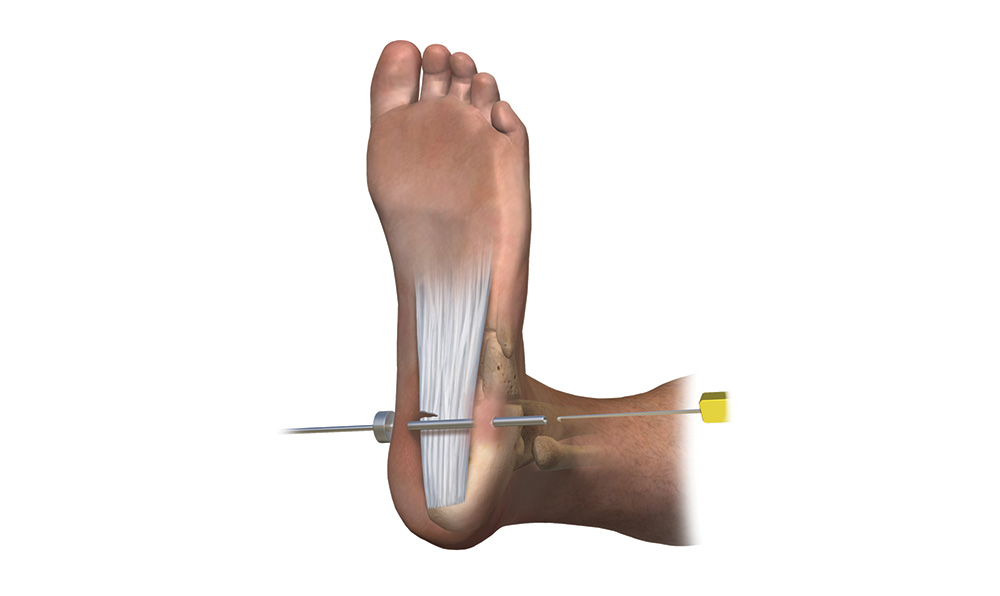
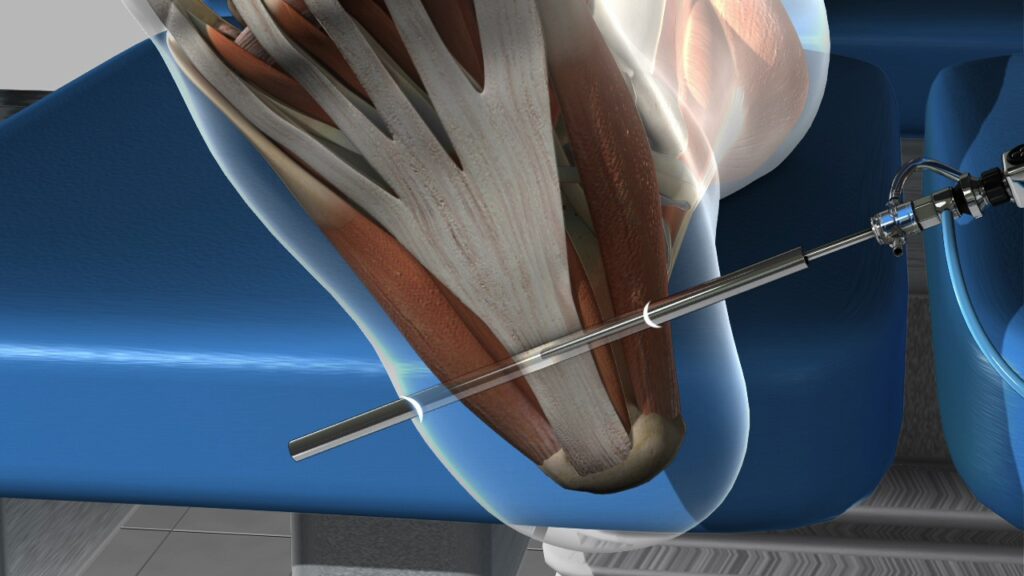
In cases where severe plantar fasciitis and chronic heel pain do not improve with conservative treatments, Endoscopic Plantar Fasciotomy (EPF) may be recommended. This minimally invasive surgical procedure is designed to relieve tension in the plantar fascia ligament, which runs along the bottom of the foot and is often the source of persistent heel pain. During EPF, Dr. Fox makes a very small incision and uses a specialized camera and instruments to carefully release a portion of the tight plantar fascia. By reducing the strain on the ligament, pressure on the heel is relieved and inflammation can gradually resolve. Because EPF is performed through tiny incisions, patients typically experience less postoperative discomfort, smaller scars, and a faster recovery compared to traditional open heel surgery. At Fox River Foot and Ankle Centers, Dr. Fox carefully evaluates each patient to determine if EPF is the right option when non-surgical heel pain treatments have not provided lasting relief.
Plantar fasciitis
Heel Pain Relief for a Busy Mom
How Dr. Fox Helped One Patient Walk Comfortably Again When Heel Pain Begins to Control Your Life
For many parents, staying active isn’t optional—it’s part of daily life. Between work, school drop-offs, errands, and caring for children, being on your feet is simply part of the job.
For Maria, a hardworking single mom in the Fox Valley area, persistent heel pain began turning everyday tasks into a challenge.
At first, the pain felt like a dull ache in the bottom of her heel. But over time, the discomfort became sharper and more intense—especially first thing in the morning. Getting out of bed felt like stepping onto a sharp rock.
Walking her kids to school, standing at work, even simple errands became painful. She started avoiding activities she once enjoyed, worried that the pain would only get worse.
Eventually, Maria realized she needed expert help.
That’s when she found Fox River Foot and Ankle Centers and scheduled a visit with Dr. Fox.
Do You Have Plantar Fasciitis?
If you feel stabbing heel pain when you first get out of bed or after sitting, you may have plantar fasciitis. This common foot condition occurs when the band of tissue that supports your arch becomes inflamed.
Understanding Heel Pain
Heel pain is one of the most common foot problems treated by Dr. Fox and his Team. The heel bone is the largest of the 26 bones in the foot, and it supports tremendous stress every day when we walk, run, or stand.
Because the foot contains 33 joints and more than 100 tendons, muscles, and ligaments, even small biomechanical issues can lead to inflammation and pain.
Heel pain can occur:
On the bottom of the heel
In the back of the heel
In the front portion of the heel
For many patients like Maria, the condition can become severe enough to interfere with daily life.
What Causes Heel Pain?
When Maria visited Dr. Fox, the first step was understanding the cause of her pain. Heel pain can develop for many reasons, often related to biomechanical stress on the foot.
Let us explore some common causes.
Plantar Fasciitis
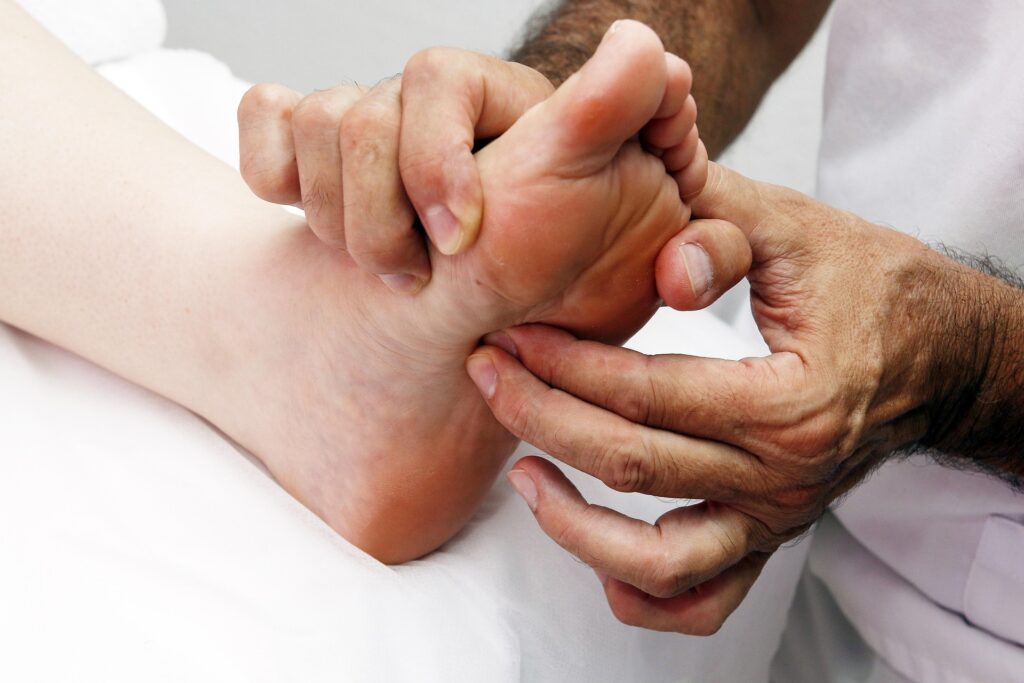
One of the most common causes of heel pain is plantar fasciitis, an inflammation of the band of connective tissue running along the bottom of the foot.
This tissue, called the plantar fascia, stretches from the heel bone to the ball of the foot and supports the arch.
Over time, repeated strain can cause small tears in the tissue, leading to:
Heel pain
Inflammation
Difficulty walking
Pain with the first steps in the morning
Many patients notice that the pain improves slightly as they walk, only to return after prolonged standing or activity.
Heel Spurs
Heel pain is sometimes associated with heel spurs, which are bony growths that develop on the underside of the heel bone.
These spurs form when repeated stress causes strain on the muscles and ligaments of the foot. Over time, the body responds by forming a small calcium deposit that can be seen on an X-ray.
Heel spurs may develop from:
Running or high-impact activity
Poorly fitting footwear
Obesity
Biomechanical imbalance
Achilles Tendinitis
Pain in the back of the heel may be caused by Achilles tendinitis, an inflammation of the Achilles tendon where it attaches to the heel bone.
This condition often develops gradually from repetitive strain and is common in people who walk or run frequently.
Overuse or repetitive stress from running, sports, or increased activity
Tight calf muscles placing excessive strain on the tendon
Improper footwear that lacks support or cushioning
Foot structure issues such as flat feet or abnormal gait
Excessive Pronation
Another common cause of heel pain is excessive pronation, which occurs when the foot rolls inward too much while walking.
This abnormal motion places extra strain on the ligaments and tendons attached to the heel bone and can also contribute to problems in the knees, hips, and lower back.
Heel pain
Difficulty walking
Pain with the first steps in the morning
When to See Dr.Fox for Heel Pain
You should see a podiatrist if:
Heel or tendon pain lasts more than a few days
Pain worsens with activity
You notice swelling or difficulty walking
- Your pain is affecting your activity choices
Early treatment can prevent more serious tendon injuries.
Other Causes of Heel Pain
Other conditions can also lead to heel pain, including:
Rheumatoid arthritis or gout
Inflamed bursae (bursitis)
Nerve irritation or neuroma
Haglund’s deformity (“pump bump”)
Bone bruises or contusions
Because there are many possible causes, accurate diagnosis by Dr, Fox is essential.
Maria’s Recovery
Within weeks of starting treatment with Dr. Fox, Maria began noticing real improvement.
The sharp morning pain slowly faded. Walking became easier. She could stand longer without discomfort.
Most importantly, she could return to the activities that mattered most—taking care of her family and staying active with her children.
For Maria, the difference was life-changing.
And for Dr. Fox, helping patients get back on their feet is exactly why Fox River Foot and Ankle Centers exists.
Heel Pain Treatment Options
Advanced Care for Heel Pain and Plantar Fasciitis
Heel pain can make even the simplest activities—walking, standing, or exercising—uncomfortable. At Fox River Foot and Ankle Centers, Dr. Fox provides comprehensive diagnosis and advanced treatment options to relieve heel pain and restore normal foot function.
Most cases of heel pain, including plantar fasciitis, can be treated successfully without surgery using modern podiatric treatments designed to reduce inflammation, support the foot, and promote healing.
Custom orthotics help:
Support the arch of the foot
Reduce strain on the plantar fascia
Improve walking mechanics
Prevent recurring heel pain
Custom Orthotics and Foot Support
One of the most effective treatments for heel pain is custom functional orthotics. These medical-grade inserts are designed specifically for your feet and help correct biomechanical imbalances such as excessive pronation, which can place stress on the heel.
By redistributing pressure across the foot, orthotics often provide long-term relief for plantar fasciitis and chronic heel pain.
Foot Taping and Strapping
Therapeutic taping techniques can provide immediate relief by supporting the ligaments and muscles of the foot.
Taping helps place stressed tissues in a more physiologically restful position, reducing strain on the plantar fascia and improving stability during walking.
This treatment is often used alongside orthotics or physical therapy.
Anti-Inflammatory Treatments
Inflammation is a major cause of heel pain. Treatment may include oral or injectable anti-inflammatory medications to reduce swelling and provide relief while the foot heals.
These treatments can help decrease pain and allow patients to resume normal activity more comfortably.
When Heel Pain Requires Surgery
Most cases of heel pain respond well to conservative treatment. However, in rare situations where pain remains severe, surgical treatment may be considered.
Surgical procedures may involve:
Release of the plantar fascia
Removal of a heel spur
Treatment of inflamed tissue such as a bursa or neuroma
Dr. Fox carefully evaluates each patient to determine the least invasive and most effective treatment approach.
Endoscopic Plantar Fasciotomy (EPF) – Heel Pain Surgery
Ready to finial get rid of heel pain?