
If your toe is red, swollen, or painful, an ingrown toenail may be the cause. At Fox Foot and Ankle Centers, we diagnose and treat ingrown toenails quickly so you can get back to walking, working, and enjoying your activities without pain.
We help patients in Oswego. Coal City,Channahon, IL and the surrounding communities find fast relief from painful ingrown toenails.
A Story Many Teens and Parents Know Too Well
Jake was a typical high school athlete. Between soccer practice, school, and spending time with friends, he was always on the move.
Then one week something changed.
Every time he put on his soccer cleats, he felt a sharp pain in his big toe. At first he ignored it, thinking it was just a sore toe from practice.
But the pain kept getting worse.
Within a few days the toe became red, swollen, and extremely tender. Walking started to hurt, and running became nearly impossible.
Jake had developed one of the most common foot problems seen in teenagers and athletes: an ingrown toenail.
After struggling through a few days of discomfort, Jake’s parents scheduled a visit at Fox Foot and Ankle Centers.
During the appointment, the podiatrist quickly identified the problem and treated the ingrown portion of the nail. The procedure was simple and performed right in the office.
Relief came almost immediately.
Within a short time Jake was back on the soccer field, pain-free and able to focus on the game again.
Stories like Jake’s are common. Ingrown toenails affect many teens, athletes, and active adults, but with proper treatment they can often be resolved quickly and safely.
If you or your child is experiencing toe pain, redness, or swelling, professional podiatric care can provide fast relief and help prevent the problem from returning.
WHAT IS AN INGROWN TOENAIL
An ingrown toenail occurs when the edge of the nail grows into the surrounding skin instead of growing straight outward.
This causes irritation, inflammation, and sometimes infection.
While any toe can develop an ingrown nail, the big toe is affected most often.
Ingrown toenails are especially common in:
• Teenagers
• Athletes
• People who wear tight shoes
• Individuals who trim nails incorrectly
Without treatment, the condition can worsen and become infected.
Symptoms of ingrown Nail of the Foot
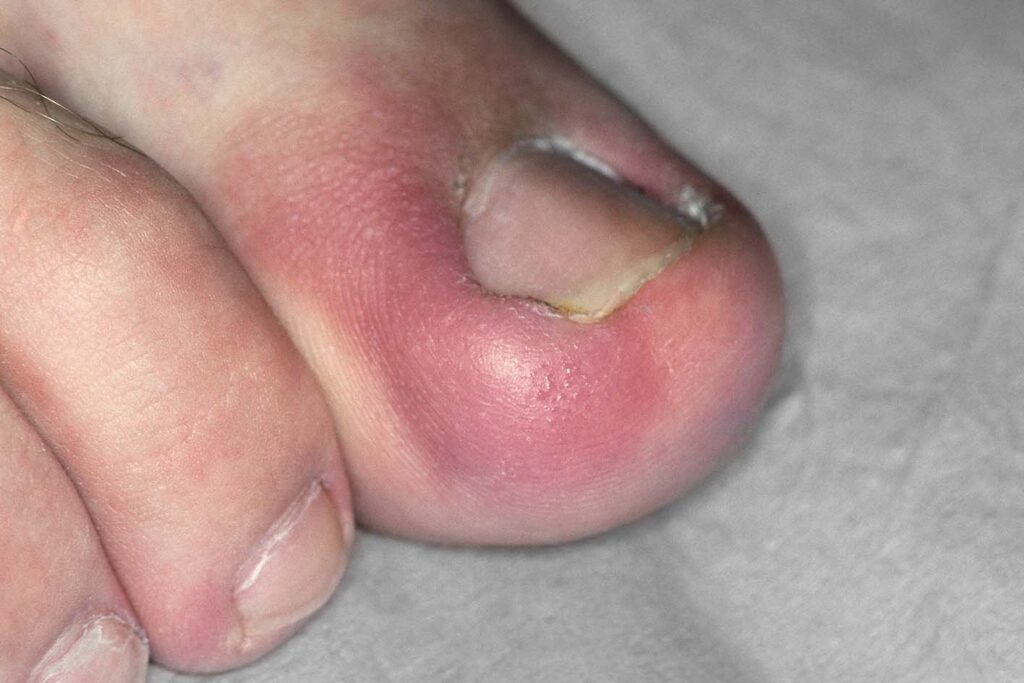
Many people do not realize they have an ingrown toenail until symptoms become painful.
Watch for these warning signs:
• Pain along the edge of the nail
• Redness around the toenail
• Swelling of the surrounding skin
• Drainage or pus
• Tenderness when wearing shoes
• Overgrowth of tissue around the nail
Jake experienced several of these symptoms before seeking help.
What Causes Ingrown Toenails?
Ingrown toenails develop for several reasons. Understanding the causes can help prevent future problems.
A Repeated Pressure or Trauma
Sports, running, and everyday activities that place pressure on the toes can trigger ingrown nails.
For active teens like Jake, sports shoes combined with repeated pressure can easily lead to this condition.
Orthotic Prevent ingrown toe nails by removing the abnormal pressure.
Genetics
Some people naturally have curved nails that are more likely to grow inward.

Improper Nail Trimming
Cutting toenails too short or rounding the corners can encourage the nail to grow into the surrounding skin, increasing the risk of an ingrown toenail. Nails should be trimmed straight across and not cut below the edge of the toe. Abnormal pressure from tight shoes or foot structure can also contribute to ingrown nails. Orthotics can help by redistributing pressure and improving foot alignment.
Tight or Narrow Shoes
Shoes that compress the toes can push the nail into the surrounding skin. Athletic cleats are a common cause.
Orthotic Prevent ingrown toe nails by removing the abnormal pressure.
WHEN TO SEE A PODIATRIST & HOW TREATMENT WORKS
Professional care is recommended if you notice increasing pain, swelling, redness, or drainage around the toenail. Ingrown toenails that do not improve with home care can worsen and may become infected.
You should schedule an evaluation if you experience:
• Drainage or signs of infection
• Severe redness or swelling around the nail
• Persistent pain when walking or wearing shoes
• No improvement after home treatment
• Recurring ingrown toenails
frequently asked questions FAQ about ingrown nails
FAQ 1
Can an ingrown toenail heal on its own?
Mild ingrown toenails may improve with proper nail trimming and reduced pressure on the toe. However, painful or infected nails usually require professional treatment to prevent worsening symptoms or infection.
FAQ 2
Is ingrown toenail removal painful?
The toe is numbed with local anesthesia before treatment. Most patients feel pressure but not pain during the procedure.
FAQ 3
How long does recovery take?
Most patients resume normal walking within a day or two after treatment, although the toe may remain mildly tender for several days.
FAQ 4
Can ingrown toenails come back?
Yes. Without proper treatment the nail may grow inward again. A simple in-office procedure can permanently correct the problem in many cases.
FAQ 5
Should children or teenagers see a podiatrist for an ingrown toenail?
Yes. Teenagers and athletes commonly develop ingrown toenails due to tight shoes and sports activity. Early treatment can relieve pain and prevent infection.