





 FOOT & ANKLE
Problems

Fox Foot & Ankle © 2015

WHAT IS A BUNION?
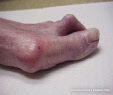
A bunion is an enlargement of the joint at the base of the big toe—the metatarsophalangeal (MTP) joint—that forms when the bone or tissue at the big toe joint moves out of place. This forces the toe to bend toward the others, causing an often painful lump of bone on the foot. Since this joint carries a lot of the body’s weight while walking, bunions can cause extreme pain if left untreated. The MTP joint itself may become stiff and sore, making even the wearing of shoes difficult or impossible. Bunions– from the Latin "bunio," meaning enlargement–can also occur on the outside of the foot along the little toe, where it is called a "bunionette" or "tailor’s bunion.".
SYMPTOMS
- Development of a firm bump on the outside edge of the foot, at the base of the big toe.
- Redness, swelling, or pain at or near the MTP joint.
- Corns or other irritations caused by the overlap of the first and second toes.
- Restricted or painful motion of the big toe.
HOW DO YOU GET A BUNION?
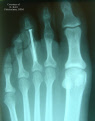
Although bunions tend to run in families, it is the foot type that is passed down—not the bunion. Parents who suffer from poor foot mechanics can pass their problematic foot type on to their children, who, in turn, are also prone to developing bunions. The abnormal functioning caused by this faulty foot development can lead to pressure being exerted on and within the foot, often resulting in bone and joint deformities such as bunions and hammertoes.
Other causes of bunions are foot injuries, neuromuscular disorders, or congenital deformities. People who suffer from flat feet or low arches are also prone to developing these problems, as are arthritic patients and those with inflammatory joint disease. Occupations that place undue stress on the feet are also a factor; ballet dancers, for instance, often develop the condition.
Wearing shoes that are too tight or cause the toes to be squeezed together is also a common factor, one that explains the high prevalence of the disorder among women.
WHAT CAN YOU DO FOR RELIEF?
- Apply a commercial, non-
medicated bunion pad around the bony prominence. - Wear shoes with a wide and deep toe box.
- If your bunion becomes inflamed and painful, apply ice packs several times a day to reduce swelling.
- Avoid high-
heeled shoes over two inches tall. - See your podiatric physician if pain persists.
TREATMENT FOR BUNION PAIN
Treatment options vary with the type and severity of each bunion, although identifying
the deformity early in its development is important in avoiding surgery. Podiatric
medical attention should be sought at the first indication of pain or discomfort
because, left untreated, bunions tend to get larger and more painful, making non-
The primary goal of most early treatment options is to relieve pressure on the bunion and halt the progression of the joint deformity. A podiatric physician will recommend treatments based on your specific condition, including, but not limited to padding and taping, medication, physical therapy, orthotics, or surgical options.
YOUR FEET AREN’T SUPPOSED TO HURT
Remember that foot pain is not normal, and any disruption in foot function limits your freedom and mobility. It is important to schedule an appointment with your podiatrist at the first sign of pain or discomfort in your feet, and follow proper maintenance guidelines to ensure their proper health for the rest of your life. The advice in this pamphlet should not be used as a substitute for a consultation or evaluation by a podiatric physician.
Bunions form when the normal balance of forces that is exerted on the joints and tendons of the foot becomes disrupted. This can lead to instability in the joint and cause the deformity. They are brought about by years of abnormal motion and pressure over the MTP joint. They are, therefore, a symptom of faulty foot development and are usually caused by the way we walk, and our inherited foot type, our shoes, or other sources.